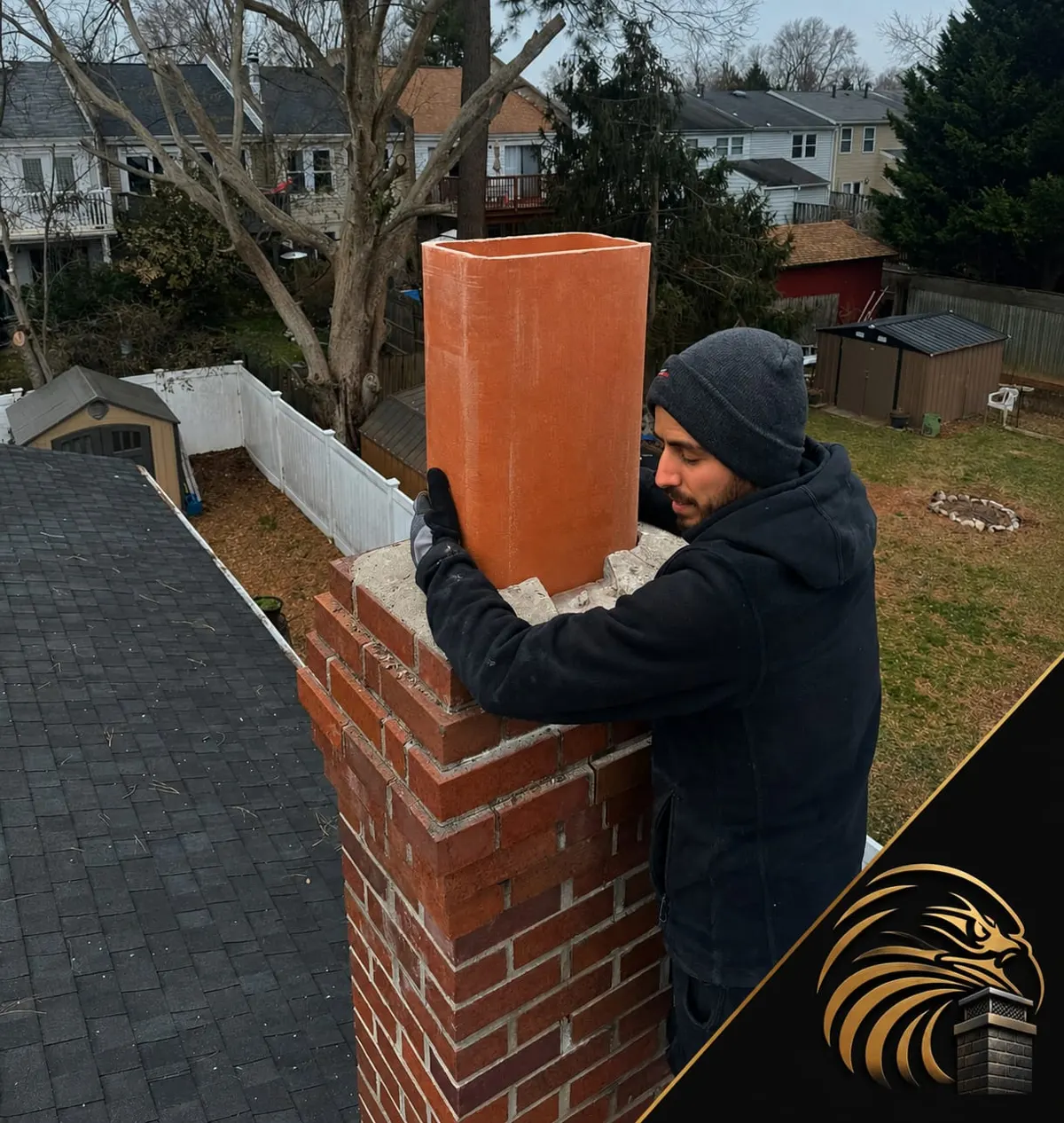
Smoke chamber parging and repair for Philadelphia-area fireplaces — the sloped, sealed chamber a safe, clean-burning fireplace needs.
Between the damper and the flue sits the smoke chamber — the funnel that compresses smoke from the wide firebox into the narrow flue. In a well-built fireplace its walls are smooth, sloped and sealed with a parged coating. In a great many of the fireplaces we camera-inspect around Philadelphia, they are none of those things: stepped, corbelled brick ledges, open mortar joints and gaps where the chamber meets the flue — a rough, leaky funnel that slows smoke, collects creosote on every ledge, and passes heat to the framing behind it.
Smoke chamber repair — parging the chamber with refractory coating, sealing its joints and, where the geometry is wrong, reshaping it — is one of the highest-value repairs in the whole chimney system. It is also one of the most skipped, because nobody sees the chamber without a camera. Our Level 2 inspections photograph it on every visit, and if yours needs work you will see exactly why, in pictures, before we quote the repair.
Tell us about your chimney or gas fireplace — we confirm every request by phone. Prefer to talk? Call (855) 424-6217.
Smoke rises in a column and hates corners. Every corbelled ledge in an unparged chamber creates an eddy — a pocket of turbulence where smoke stalls, cools and drops its creosote. Stack enough ledges and the fireplace smokes on startup, smells of tar in summer humidity, and coats the chamber in the most flammable creosote in the system, inches above the fire. A parged chamber is a smooth funnel: the column accelerates into the flue, ledges disappear, and the creosote that does form lands where a sweep can reach it. Many "draft problems" in older Philadelphia homes are chamber problems wearing a disguise.
The chamber walls in older construction can be a single brick wythe away from wood framing, and an unparged chamber leaks heat through open joints directly toward it — for the full length of every fire, for decades. Parging seals those joints and adds a refractory skin rated for the temperatures involved. It is the same reason a chamber in poor condition is flagged on every proper inspection report: of all the defects a camera finds, this is the one closest to the fire and the framing at the same time.
This work is searched for by many names. Every service below is performed as part of — or booked through — this one:
Only a camera can tell you — the chamber cannot be seen from the firebox or the roof. If your inspection report shows stepped, uncoated brick and open joints in the chamber, that is the finding. We will show you your own chamber photos and explain what you are looking at.
A parge coat is a smooth layer of refractory material troweled or sprayed over the chamber walls, sealing joints and smoothing the corbelled steps into a continuous funnel. We use coatings made and rated for smoke chambers — not ordinary mortar, which is not rated for that position.
If the smoking comes from chamber turbulence — a common cause — yes, it is the direct fix. If the cause is flue size, chimney height or house pressure, parging alone will not cure it, and our draft and smoke diagnosis will separate the causes before you spend on either.
Most chambers are a one-day job including the before-and-after camera work. Chambers needing masonry rebuilding beyond coating are scoped separately, from the same photos.
The inspection identifies and documents the chamber’s condition; the repair is separate work, quoted from those photos. If you proceed, the post-repair camera verification is included so the file closes with proof.
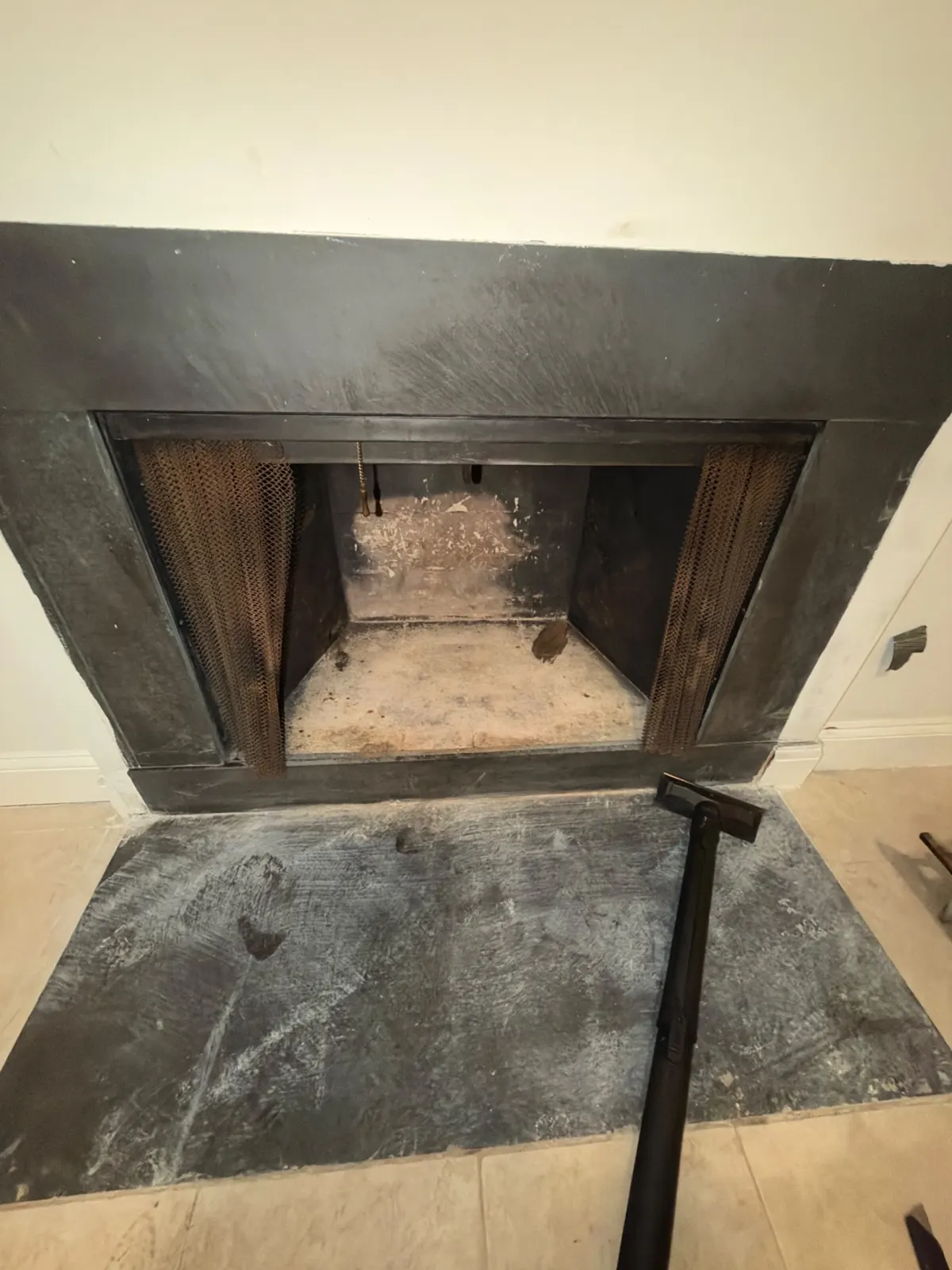
A full sweep of the flue, firebox and smoke chamber — creosote gone, draft restored, and a written condition report before we leave.
Learn more →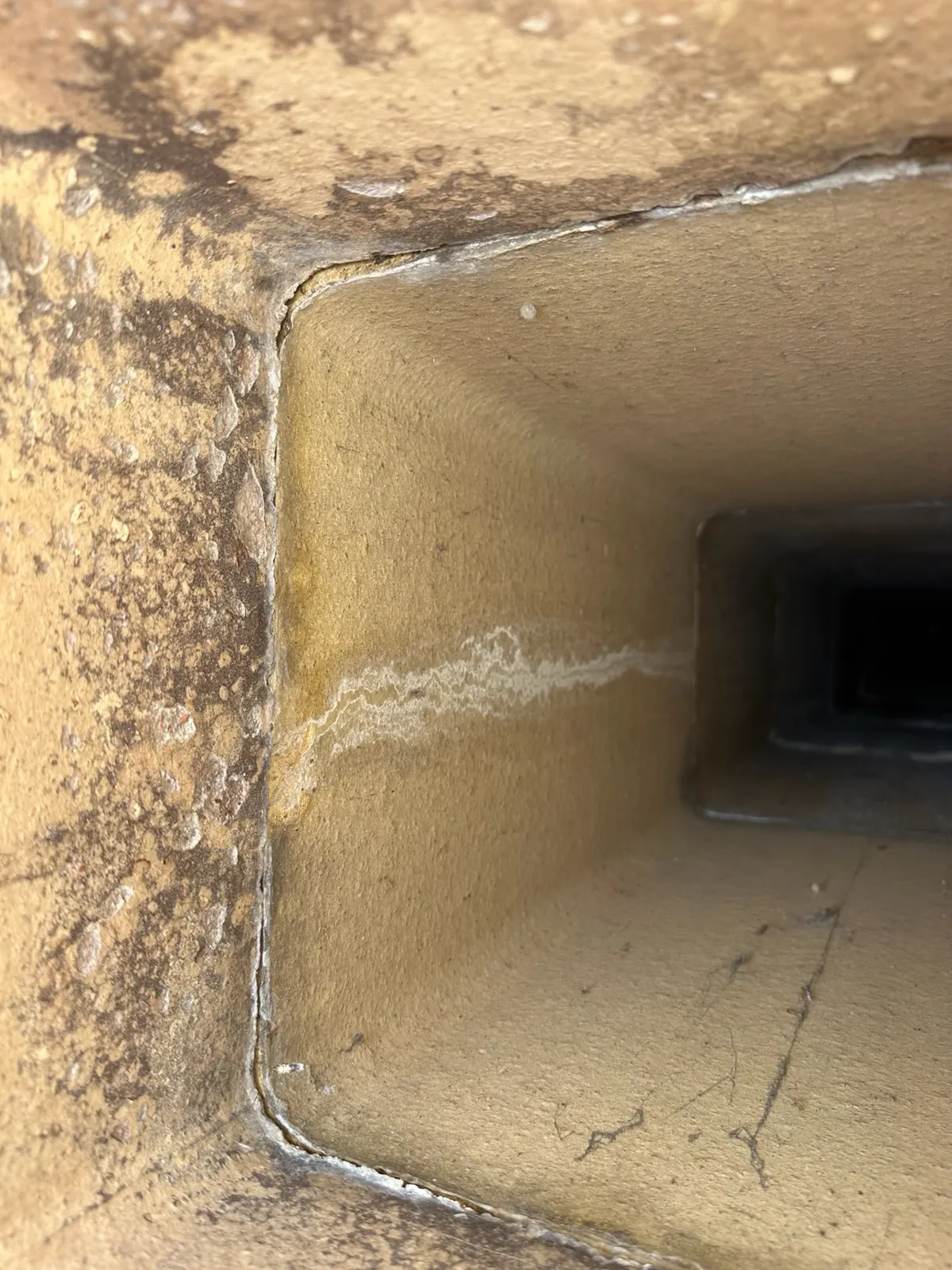
Level 1 and Level 2 chimney inspections with camera scanning, a photo report and straight answers — for annual checks, home sales and after a chimney fire.
Learn more →
The annual inspection for chimneys in regular service: every accessible part checked, condition documented, safety confirmed for another season.
Learn more →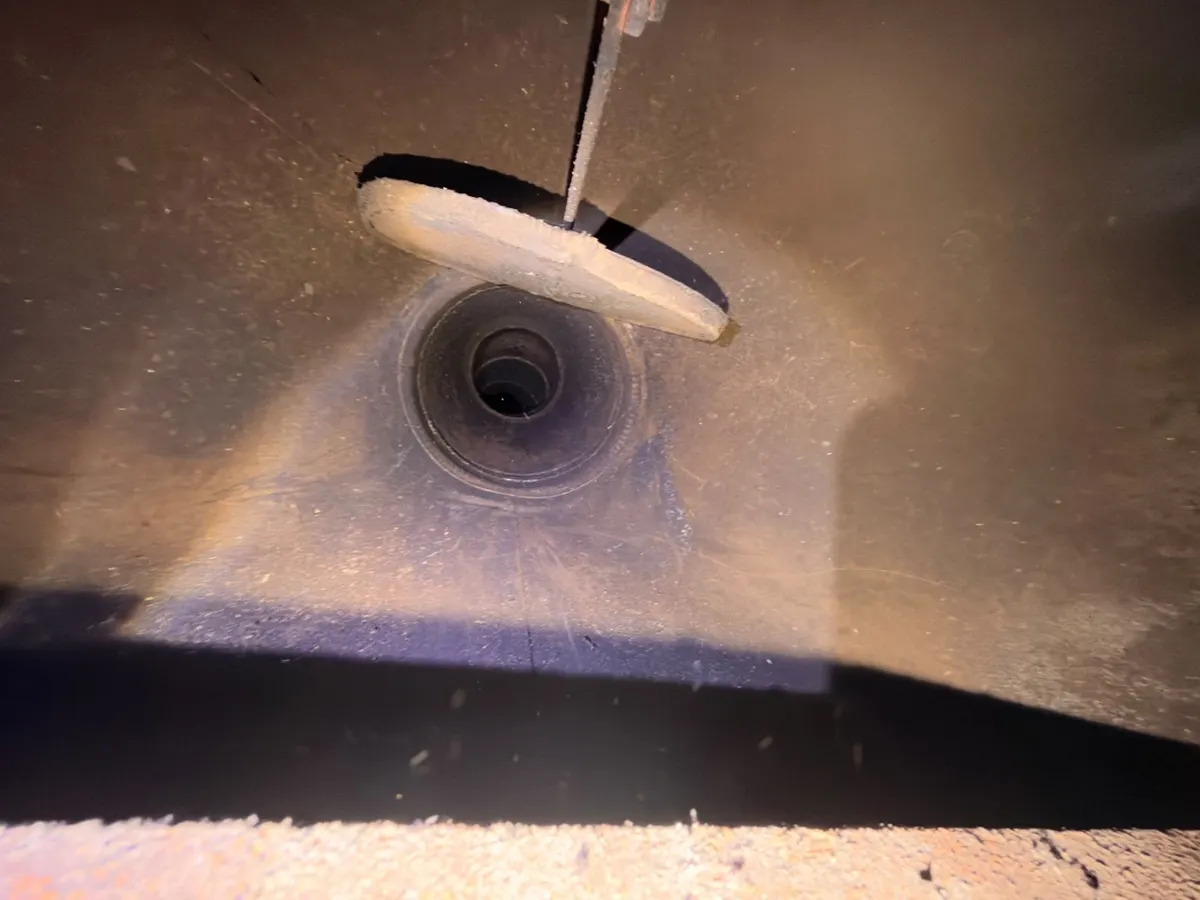
Camera inspection of the entire flue, plus attics, crawl spaces and concealed areas — the inspection for home sales, chimney fires and appliance changes.
Learn more →