Smoke in the Living Room? A Pennsylvania Guide to Chimney Draft Problems
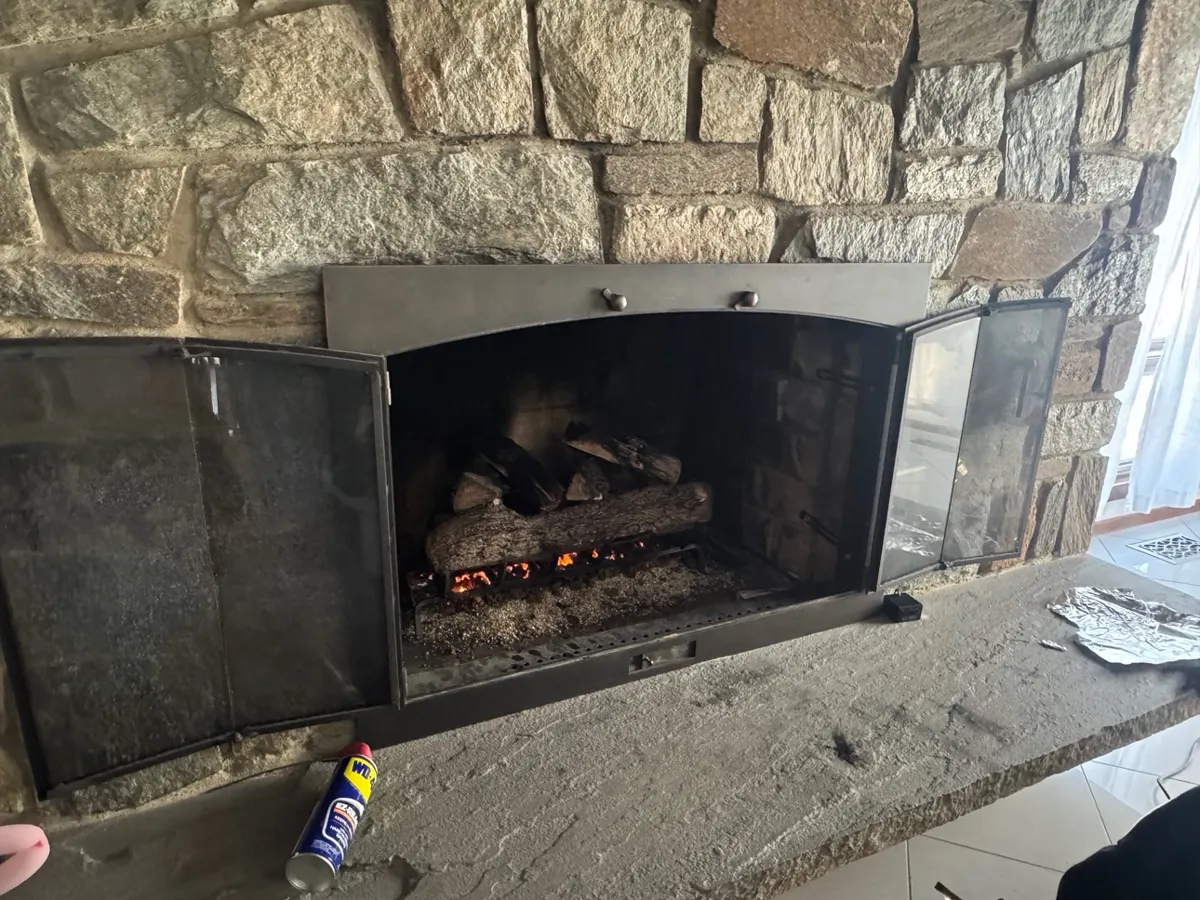
Few things end a fireside evening faster than smoke rolling out of the fireplace and into the room. Homeowners tend to blame the firewood, or the fireplace itself, and start burning smaller fires — treating the symptom while the cause sits untouched. A smoking fireplace is a draft problem, and draft is physics: measurable, diagnosable and, in the large majority of homes we visit across the Philadelphia metro, fixable without rebuilding anything. Here are the suspects, in roughly the order a good diagnosis checks them.
How draft is supposed to work
A chimney drafts because hot air is lighter than cold air. The column of warm gas inside the flue rises, pulling fresh air into the firebox to replace it — a continuous, silent pump powered by heat. Anything that weakens the temperature difference, narrows the passage, or gives the house a stronger pull in the other direction weakens draft. That is the whole framework: every smoking fireplace is some combination of a chimney that cannot pull hard enough and a house that pulls back harder.
Suspect one: your house is winning
The modern Pennsylvania home fights its fireplace. Kitchen range hoods, bath fans, dryer vents and whole-house systems all exhaust air — and a renovated, well-sealed house has few leaks to replace it. The fireplace becomes the easiest intake path, and air comes down the flue instead of up it. The classic pattern: the fireplace smokes worst when the kitchen hood or dryer is running, or in newer and newly renovated homes — tight envelopes in the suburbs, gut-renovated rowhomes in the city. The test is simple (open a window near the fireplace an inch and see if the smoke behaves) and so are many of the fixes, from makeup-air strategies to top-sealing dampers that stop the reverse flow between fires.
Suspect two: the flue itself
A cold flue starts badly: the first fire of the season has to push a column of cold, heavy air up and out before draft establishes, which is why fireplaces often smoke at startup and settle once warm — and why an outside-wall chimney, cold-soaked all day, starts worse than an interior one. Then there are the physical restrictions: creosote narrowing the passage, a fallen tile or brick bridging the flue, a nest from the spring, or a flue that is simply the wrong size for the fireplace opening — too small and it cannot carry the smoke volume, too large and the gases cool and stall. Each of these is visible on a camera inspection, which is why diagnosis starts there rather than with guesses.
Our draft and smoke problem diagnosis page explains how we isolate the cause, and a chimney inspection with a camera run is usually the first step — it turns a guessing game into a photograph.
Suspect three: weather, wind and the neighbors
Wind is the variable nobody controls. A chimney that ends below the roof peak, or below a taller neighboring rowhome or a mature tree line, sits in turbulent air that can push down the flue on gusty days — the fireplace that smokes only when the wind is from one direction is telling you exactly this. Height extensions and the right cap design solve most of it. Nor'easters add a second effect: wind-driven rain and pressure swings that make a marginal chimney misbehave for a weekend and then seem fine, which is why we ask about patterns, not just incidents.
What a real diagnosis looks like
It starts with questions — when does it smoke, at startup or mid-fire, with which appliances running, since when, what changed — because the pattern points at the cause. Then a look at the whole system: firebox and damper, a camera run of the flue, the top of the chimney measured against the roofline and what stands around it, and the house pressure picture. Only then a fix list, in order of likelihood and cost. What it should never look like is a part replaced on spec, or a liner sold for a problem a damper and a cap would have solved.
The bottom line
Smoke in the room is information, not bad luck — and it is also not something to live with, because a fireplace that spills smoke is moving combustion gases, including carbon monoxide, in the wrong direction. If yours smokes, get it diagnosed before the next fire, not after a season of opening windows. Eagle Chimney Services diagnoses draft and smoke problems across Philadelphia and Bucks, Montgomery, Chester and Delaware counties — call (855) 424-6217 and tell us the pattern; we will take it from there.
Need a Hand With Your Chimney?
Call (855) 424-6217 — phones answered 24/7, service Sunday through Friday across 165 Pennsylvania communities.
More Guides
- When Should You Sweep Your Chimney in Pennsylvania? A Delaware Valley Guide
- Rowhouse Chimneys: What Philadelphia Row and Twin Home Owners Need to Know
- Gas Fireplace Acting Up? 7 Signs It Needs Service (and Which Ones Mean Stop)
- Your Furnace Has a Chimney Too: Oil and Gas Flues in Philly-Area Homes
- Chimney Liner Replacement in Pennsylvania: Clay Tile vs Stainless Steel
- Chimney Caps and Dampers: The Small Parts That Protect Everything Below