
Chimney Caps and Dampers: The Small Parts That Protect Everything Below
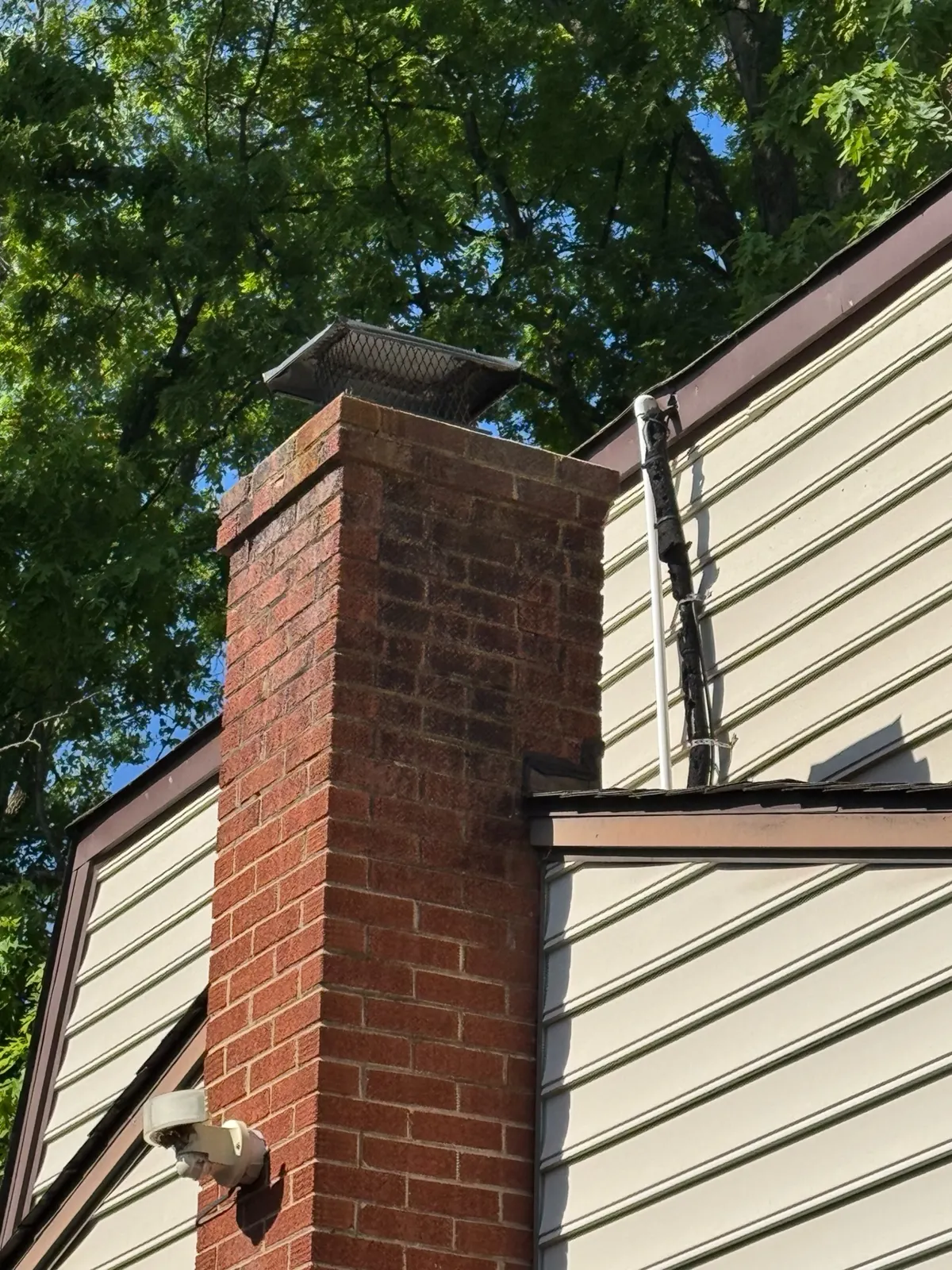
Walk any street in Philadelphia or the older suburbs and look up: a surprising number of chimneys end in an open hole. No cap, sometimes no crown left to speak of — just a flue tile sticking up into the weather, taking every rainstorm straight down into the chimney. At the other end of the same flue, forgotten behind the fireplace opening, sits a damper that may not have sealed properly since the house was built. Between them, these two small parts decide more about a chimney's lifespan and a home's heating bills than almost anything else we service.
The cap: a roof for the flue
A chimney cap is a fitted cover — a solid top held above the flue opening on a mesh cage — and it does four jobs at once. It keeps rain and snow out of the flue, where water mixes with soot into a corrosive paste that eats mortar and tile. It keeps animals out: raccoons, squirrels, starlings and chimney swifts all read an open flue as housing, and a nesting blockage is a smoke and carbon monoxide problem, not just a nuisance. It keeps wind-blown leaves and debris from collecting on the smoke shelf. And its mesh acts as a spark screen, catching embers on the way up. A cap is not decorative trim; it is the chimney's first line of defense, and a stainless one is typically the last cap a home ever buys.
The crown underneath it
The cap mounts at the crown — the concrete slab that caps the masonry itself — and the two fail together. Crowns crack from freeze-thaw cycles, water runs into the cracks and pries them wider every winter, and the moisture then works down through the stack: spalling bricks, white staining, leaks that appear in the ceiling below and get blamed on the roof. When we replace a cap we inspect the crown in the same visit, because a new cap on a failed crown is money spent next to the actual problem. Sound crowns get sealed; failed ones get rebuilt with a proper overhang and drip edge so water sheds clear of the brick.
Our chimney caps and crowns page walks through the options and what a visit includes — and city homeowners can see the local version on our caps and crowns in Philadelphia page.
Dampers: the door you forget exists
The damper is the movable plate that opens the flue when you burn and is supposed to close it when you do not. On most older Pennsylvania homes it is a cast-iron throat damper sitting just above the firebox — and after decades of heat, soot and moisture, most of them warp, rust or jam partway. A damper that does not seal turns the flue into an open window all winter: heated room air rises straight out of the house around the clock, and cold air sinks down the chimney between fires, which is why so many fireplaces feel like a draft source in January. If yours is hard to move, will not latch, or you can feel air moving at the hearth on a windy day with the damper closed, it has stopped doing its job.
Throat damper vs top-sealing damper
A throat damper can often be repaired or replaced in kind, and that is the right fix when the plate is sound but the mechanism has failed. The alternative worth knowing about is the top-sealing damper: it mounts at the very top of the flue, where the cap would go, and closes with a gasketed seal operated by a cable down to the fireplace. Because it seals at the top, it stops the entire column of cold air above the firebox, keeps weather and animals out as a cap does, and typically ends the hearth draft completely. For homes that use the fireplace occasionally and fight the draft constantly, it is often the single most satisfying upgrade we install.
The failure signs, top and bottom
At the top: a cap that is missing, rusted through, tilted or sitting beside the chimney on the roof; mesh clogged with creosote; a crown with visible cracks or missing chunks. At the bottom: a damper handle that spins or will not engage, rust flakes and debris falling into the firebox, a campfire smell in summer (rain reaching creosote through an open top), and animals audible in the flue. Every one of these shows up on a routine sweep visit — a cap and crown check rides along with our sweeping, and the damper gets opened, closed and inspected while the flue is being cleaned.
The bottom line
Caps and dampers are small, inexpensive parts compared to the repairs they prevent: liners killed by water, masonry opened by freeze-thaw, heating bills leaking up an unsealed flue all winter. If you cannot remember the last time either one was looked at, that is the answer — have them checked. Eagle Chimney Services inspects, repairs and replaces caps, crowns and dampers across Philadelphia and Bucks, Montgomery, Chester and Delaware counties — call (855) 424-6217 and we will show you photos of yours, from the roof and from the hearth.
Need a Hand With Your Chimney?
Call (855) 424-6217 — phones answered 24/7, service Sunday through Friday across 165 Pennsylvania communities.
More Guides
- When Should You Sweep Your Chimney in Pennsylvania? A Delaware Valley Guide
- Rowhouse Chimneys: What Philadelphia Row and Twin Home Owners Need to Know
- Gas Fireplace Acting Up? 7 Signs It Needs Service (and Which Ones Mean Stop)
- Your Furnace Has a Chimney Too: Oil and Gas Flues in Philly-Area Homes
- Chimney Liner Replacement in Pennsylvania: Clay Tile vs Stainless Steel
- Smoke in the Living Room? A Pennsylvania Guide to Chimney Draft Problems